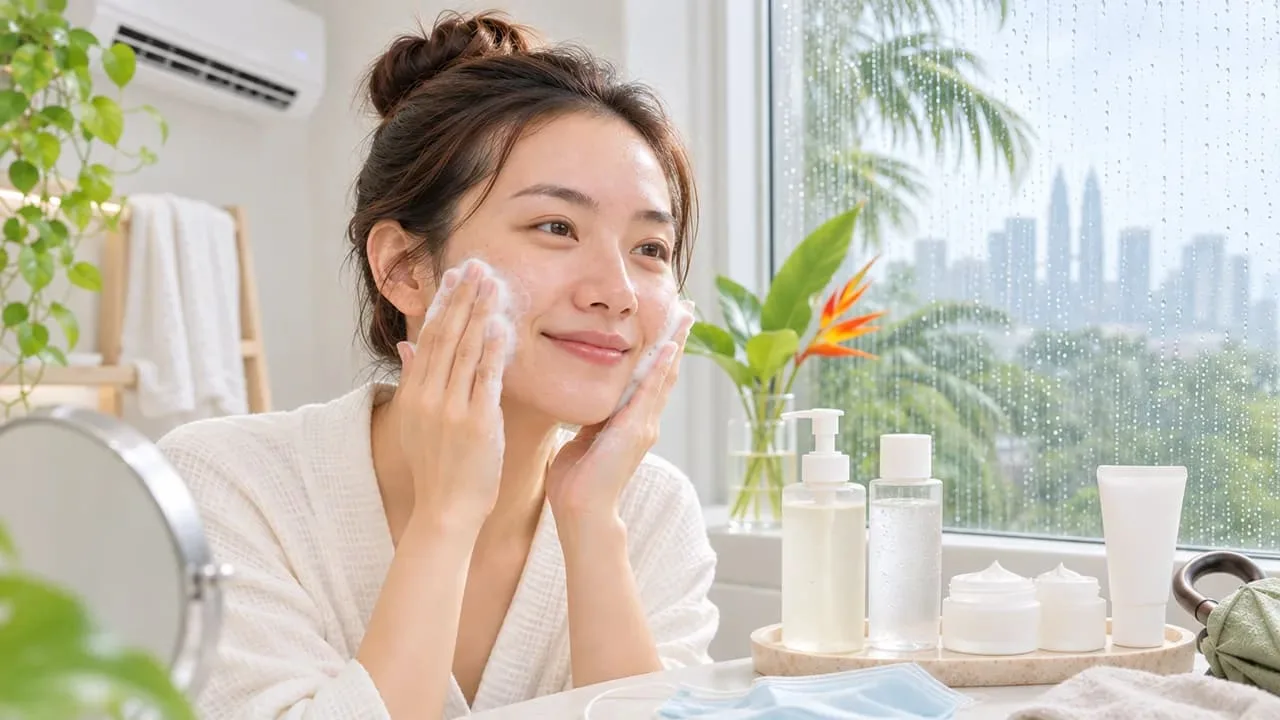
In many Malaysian homes, one bathroom shelf serves everyone: parents, teenagers, grandparents and sometimes a younger child. It is tempting to buy a single set of products for the whole household, and for some products that works well. For others it does not. This guide explains which skincare basics can reasonably be shared, what each age group needs, which products should stay separate, and how to introduce anything new safely. It is general information based on guidance from dermatology and pediatric sources, not medical advice. If you would like more background on sensitive skin in family settings, you can also read our guide to sensitive skin and family skincare in Malaysia.
Can the whole family really share one skincare routine?
Partly. The part that can be shared is the foundation: a gentle cleanser, a simple moisturizer and sun protection. The part that should not be shared automatically is anything with strong active ingredients, such as prescription or retinoid products, higher-strength acids and brightening treatments. People of different ages, skin types and health situations tolerate these very differently, and a product that suits one adult can irritate a child or a grandparent.
A practical way to think about it is two layers. The first layer is shared and kept as simple as possible. The second layer is personal, chosen by each person according to their own skin and, where needed, advice from a doctor.
What makes a skincare product gentle enough for the whole family?
There is no official definition of "gentle", so it helps to check a few specific things on the label and the brand's product page:
-
Fragrance-free rather than only unscented. The American Academy of Dermatology (AAD) notes that products labelled "unscented" may still contain chemicals that mask odours, and these can irritate dry skin. "Fragrance-free" is the clearer label.
-
A short, understandable formula. Fewer active ingredients mean fewer chances of a reaction, and it is easier to work out the cause if one happens.
-
Mild cleansing. For oily skin, the AAD advises a mild foaming wash and cautions that harsh washes can trigger more oil. For dry skin it recommends gentle cleansers used only where needed.
-
No alcohol-heavy formulas for dry or sensitive skin. The AAD advises people with dry skin to avoid products containing alcohol and fragrance.
-
A texture that suits Malaysia's humidity. A product that feels heavy in the heat will not be used consistently, whatever the label says.
-
Clear directions and a clear target group. If a brand does not say who a product is for, ask the brand or a doctor before sharing it with a child.
"Gentle" also never means "guaranteed to suit everyone". Even mild products can cause a reaction in some people, which is why the patch test later in this guide matters.
What does each age group need?
-
Babies under six months: Skin care here is a medical and parenting topic first. Use only what a pediatrician recommends, and keep sun protection mainly to shade and clothing (see the sun section below).
-
Young children: A gentle wash when needed, a simple fragrance-free moisturizer if the skin is dry, and shade, clothing and sun protection for outdoor play. Children with eczema or recurring rashes should be seen by a doctor rather than treated with adult products.
-
Teenagers: Oiliness and breakouts are common. The Children's Hospital of Orange County (CHOC) advises washing no more than twice a day with a mild cleanser, avoiding harsh scrubs, choosing products labelled noncomedogenic, and not picking at pimples. It also notes that using more acne medication does not help and can cause dryness and irritation. See a doctor if breakouts are painful, scarring, or not improving with over-the-counter care.
-
Adults: Most adults can add targeted products, such as a serum or a night treatment, on top of the shared basics. Introduce one at a time.
-
Parents and grandparents in their 60s and 70s: Skin tends to be drier. The AAD advises a gentle fragrance-free cleanser, short warm (not hot) showers of about 5 to 10 minutes, and a creamy fragrance-free moisturizer applied within three minutes of bathing. Sun protection still matters at this age.
-
During pregnancy or breastfeeding: Ask a doctor before using active products. A UPMC health article advises avoiding prescription topical retinoids in pregnancy and while breastfeeding, and notes that over-the-counter retinol strengths vary, so a doctor should advise on any retinol product.
Which products should not be shared?
Treat these as personal products, and ask a doctor first for children and for anyone who is pregnant or breastfeeding:
-
Retinol and other retinoid products.
-
Exfoliating acids such as glycolic, lactic and salicylic acid, and scrubs.
-
Brightening or pigment-targeting treatments.
-
Any product that has caused stinging or redness in one family member, since another person may also react.
-
Face products used on a baby's skin unless a pediatrician has approved them.
This is also why we recommend that the shared shelf holds the basics only, with active products stored and used per person.
How do you protect every age from the sun in Malaysia?
Sun protection applies to the whole family, but the method changes with age.
-
Babies under six months: The US Food and Drug Administration and the American Academy of Pediatrics advise keeping babies this young out of direct sunlight and using shade, lightweight long clothing and a wide-brimmed hat. Sunscreen is not advised under six months without checking with a pediatrician.
-
Children, teenagers and adults: The AAD advises seeking shade, wearing protective clothing and using a broad-spectrum, water-resistant sunscreen with SPF 30 or higher on uncovered skin. The World Health Organization (WHO) notes that protective measures are recommended when the UV index is 3 or higher, and that the daily UV peak falls in the four hours around solar noon.
-
Older adults: The AAD notes that sun protection still helps limit age spots, skin thinning and skin cancer risk.
Apply enough sunscreen and reapply after sweating or swimming, as directed on the product.
How do you patch test a new product before the family uses it?
Many dermatologists suggest a simple patch test before any new product goes on the face, and this matters more for children and sensitive skin.
-
Choose a small area of skin that is easy to check, such as the inner forearm or behind the ear.
-
Apply a small amount of the product and leave the area undisturbed.
-
Check it after 24 hours, and again if you can after 48 hours.
-
Do not use the product if there is redness, itching, swelling or stinging.
-
Introduce only one new product at a time, so a reaction can be traced.
A clear patch test lowers the risk of a reaction, but it does not remove it. If a rash, swelling or breathing problem develops, wash the product off and seek medical help.
What does a simple shared routine look like?
For most households, the shared layer needs only three steps.
-
Cleanse: Use a gentle cleanser once or twice a day, and after heavy sweating. Avoid scrubbing.
-
Moisturize: Choose a fragrance-free moisturizer. A lighter gel or lotion suits oilier skin, and a richer cream suits dry skin or older family members.
-
Protect: Apply sunscreen in the morning on exposed skin, and cover up in the sun. For babies under six months, use shade and clothing instead.
Everything else, such as serums, exfoliants and anti-ageing products, belongs to the personal layer.
What are the common mistakes in family skincare?
-
Assuming that "natural" means safe. Natural ingredients can irritate skin too.
-
Sharing adult actives with children. Retinol, acids and brightening treatments are not designed for children.
-
Trying several new products at once. If a reaction happens, you cannot tell which product caused it.
-
Over-cleansing. Washing too often can dry the skin and may trigger more oil.
-
Using one moisturizer for everyone regardless of skin type. Oily and dry skin need different textures.
-
Skipping the patch test. It is a small step that is easy to forget.
-
Treating a persistent rash with skincare. Persistent eczema, rashes or severe acne need a doctor.
Which LA'DERM products can sit on a family shelf?
LA'DERM is a Malaysian skincare brand, founded in 2002 and based in Bukit Mertajam, Penang, with the positioning "Born in Malaysia. Built for the tropics." The products below are described from the brand's own product pages. The brand's pages do not state an age range for them, so please check with the brand or a doctor before using any product on children, and patch test first.
-
Oxygen Cleansing Foam (200ml, RM152): A foaming cleanser labelled for all skin types, with chamomile and olive fruit extract in the ingredient list.
-
Oxygen Cleansing Milk (200ml, RM152): A milk cleanser described for dry, sensitive and combination skin, with aloe, niacinamide and panthenol in the ingredient list.
-
Perfect Hydration (80g, RM152): An oil-free hydrating water gel. The brand also describes using it as a mask for 20 to 25 minutes, one to two times a week.
-
P-erfecting Sensitive Repairing Cream (30g, RM163): Described by the brand as suitable for all skin types, especially sensitive, dry or irritated skin. The description highlights propolis, beta-glucan and chamomile.
One product to keep on the personal shelf is the Anti-Aging Retinol Cream, which the brand says is for night use only, starting one to two nights a week, with sunscreen by day and a patch test first. It is not intended for children, and anyone who is pregnant or breastfeeding should ask a doctor first.
You can browse the Anti Sensitive & Repairing range, the Cleanser range and the Hydration range. For background on choosing a brand for tropical and family use, see our guide to skincare brands for tropical and family use in Malaysia.
Frequently Asked Questions
Can children use adult skincare products?
Not automatically. A mild cleanser or fragrance-free moisturizer may be suitable, but check the product's directions and ask a pediatrician or doctor first, especially for babies and children with eczema. Do not give children retinol, exfoliating acids or brightening treatments.
Is fragrance-free skincare better for the whole family?
For people with dry, sensitive or reactive skin, the AAD advises choosing products labelled fragrance-free, as fragrance can irritate. "Unscented" is not the same, because masking chemicals may still be present. Individual reactions still vary, so patch test.
Do teenagers need a different routine from adults?
Usually a simpler one. The basics are a mild cleanser, a lightweight noncomedogenic moisturizer and sun protection. Avoid harsh scrubs and heavy use of acne products, and see a doctor for painful or scarring acne.
Can grandparents use the same moisturizer as the rest of the family?
They can share a gentle base, but older skin is often drier, so a richer fragrance-free cream applied soon after washing is usually more comfortable than a light gel.
Is it safe to use retinol while pregnant or breastfeeding?
Ask your doctor. Health sources advise avoiding prescription retinoids in pregnancy and while breastfeeding, and the strength of over-the-counter retinol products varies, so a doctor should guide the decision.
When should we see a doctor instead of changing products?
If a rash, eczema or acne is painful, spreading, scarring or not improving, or if a product causes swelling or breathing difficulty, seek medical advice rather than switching products.
To explore more LA'DERM products, visit the LA'DERM homepage or find an authorised store through the outlet list. This article is general information and not medical advice.